The rules are simple:
Eat only natural food that is produced locally. If not local, then from your district. Eat seasonally. Spices, tea and coffee are the only items that should have a passport...

Easy food takes less than 30 minutes to make but is nutritious as well as delicious. The longer you cook food, and the more you change it, the unhealthier it becomes.
You shouldn't buy processed food and you certainly should make it!


Feel free to use these recipes for yourself, but please don't copy them or add them to another blog, etc. Please don't copy any photos.

Thursday, March 10, 2011

Fried tomatoes with onion

Fried tomatoes are often a breakfast food in Western countries, served with bacon and eggs. I don't eat such breakfasts, so I dress them up a bit and move them to lunch or dinner!

1. Heat olive oil in a pan with rosemary leaves.
2. Places tomatoes cut side down in the pan.*
3. Using a hand slicer, slice half an onion (enough for 2 tomatoes).
4. While the tomatoes are cooking, mix the onions to coat with oil and to cook evenly.
5. Turn the tomatoes over after 3 minutes.
6. Cook on the second side, covered with a lid to help hold in the heat.
7. Remove the onions at the point they are just starting to go brown.**


* Cook cut side down first, while the tomatoes are still firm, then turn them over as they soften. This means they don't become slushy.

**You can return the onions to the pan after you turn off the gas, to warm them through, while you put the tomatoes on a plate.

If the tomatoes do break, or if you want to make it a more substantial meal, you could cut the tomatoes and change this into a pasta sauce or steak topping.

Tuesday, March 8, 2011

Carrot & Onion Omlette

I eat quite a lot of eggs as a main dish, rather than as a breakfast food :) Here is a very simple omlette that includes vegetables so it is a meal by itself. Using a food processor is the key point to save time.

1. In a food processor, whiz two carrots and one onion. Add fresh thyme and a little rosemary and whiz again.
2. Put a little olive oil in a non-stick pan and add the sticks from the thyme, until the oil is hot. Remove sticks.
3. Heat the vegetables until they become a little soft. (About 3 minutes.)
4. While the veggies are cooking, beat 4 large eggs in the food processor!
5. Take the veggies from the pan and mix with the eggs.
6. Put back into the pan. Cover with a lid.
7. Cook until the bottom is golden and the top is not raw. (As well done as you like.)
8. Fold in half and slide out onto a plate.

This is nice for breakfast, lunch, dinner, or in a lunch box.


Monday, March 7, 2011

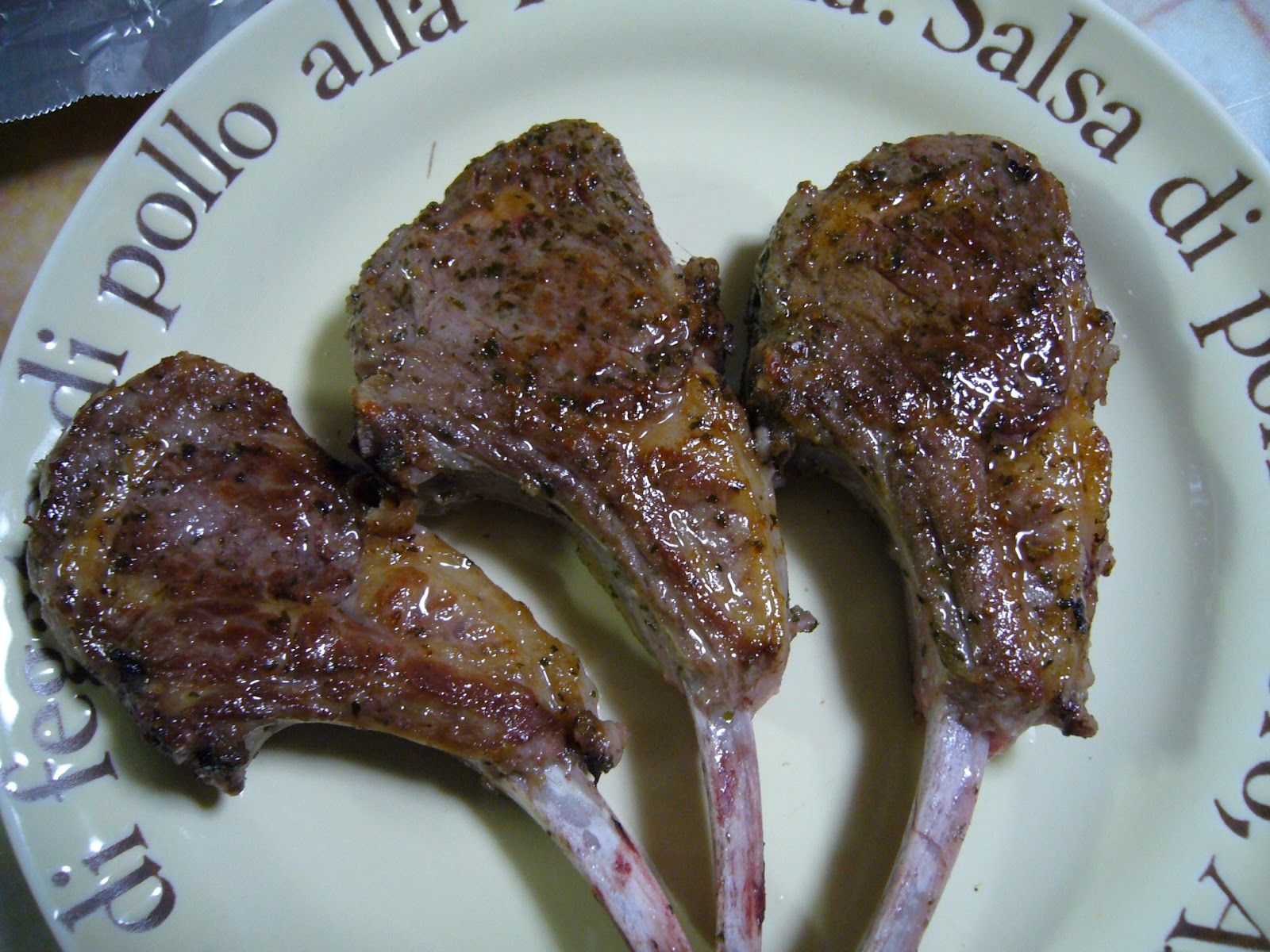
Lamb Chops

Lamb chops are expensive in Japan. 4 chops cost about 1,000yen, which is much more than I usually pay for the meat dish for dinner. (The same amount of chicken would be about 500y).

But there could be nothing faster and easier to cook!

1. Heat a little olive oil in a pan.
2. Add chops, and sprinkle with dried herbs.
3. Cook on a high heat until seared on the first side.
4. Turn over and cook the second side until just brown.
5. Take out of the pan and rest for a few minutes.

Total time, 7 minutes!

Please only buy chilled meat, never frozen lamb because it becomes tough and smelly. And lamb is quite a heavy meat, so it is best served with salad or simple steamed vegetables.

Sunday, March 6, 2011

Kumquats (kinkan)

I don't remember eating kumquats in Aust, so my first experience was here. They were preserved ones in a sugar syrup and for some reason were really bitter - like medicine!

Two weeks ago I bought fresh ones and was surprised to find you can eat them whole, skin and all. They tasted exactly like oranges. I've been told the nutrients in citrus are in the skin, so eating the skin is good for you :)

I was trying to think of something nice to cook that would suit the freshness of the kinkan and decided to match them with chicken sasami and macadamia nuts (for saltiness and crunch).

Chicken Sasami with Kinkan and Macadamia Nuts
1. Heat a little olive oil in a non-stick pan, with a few leaves of rosemary, until the oil is fragrant.
2. While the oil is heating, pound chicken sasami (tenderloins) to about 1cm thickness.
3. Cook the chicken on one side, until just golden. (Don't overcook.)
4. Turn the chicken over and repeat.
5. Top with crumbled macadamia nuts and slices of kinkan.

Saturday, March 5, 2011

Chinese yam and chicken/tomato stew


I never knew that what I call "mountain potato" is actually Chinese yam. In Japan, there are two types of "mountain potato" - yama imo (literally 'mountain potato', and just "yam" in English) and naga imo (literally 'long potato', and "Chinese yam" in English.

Neither of these are anything like American yams.

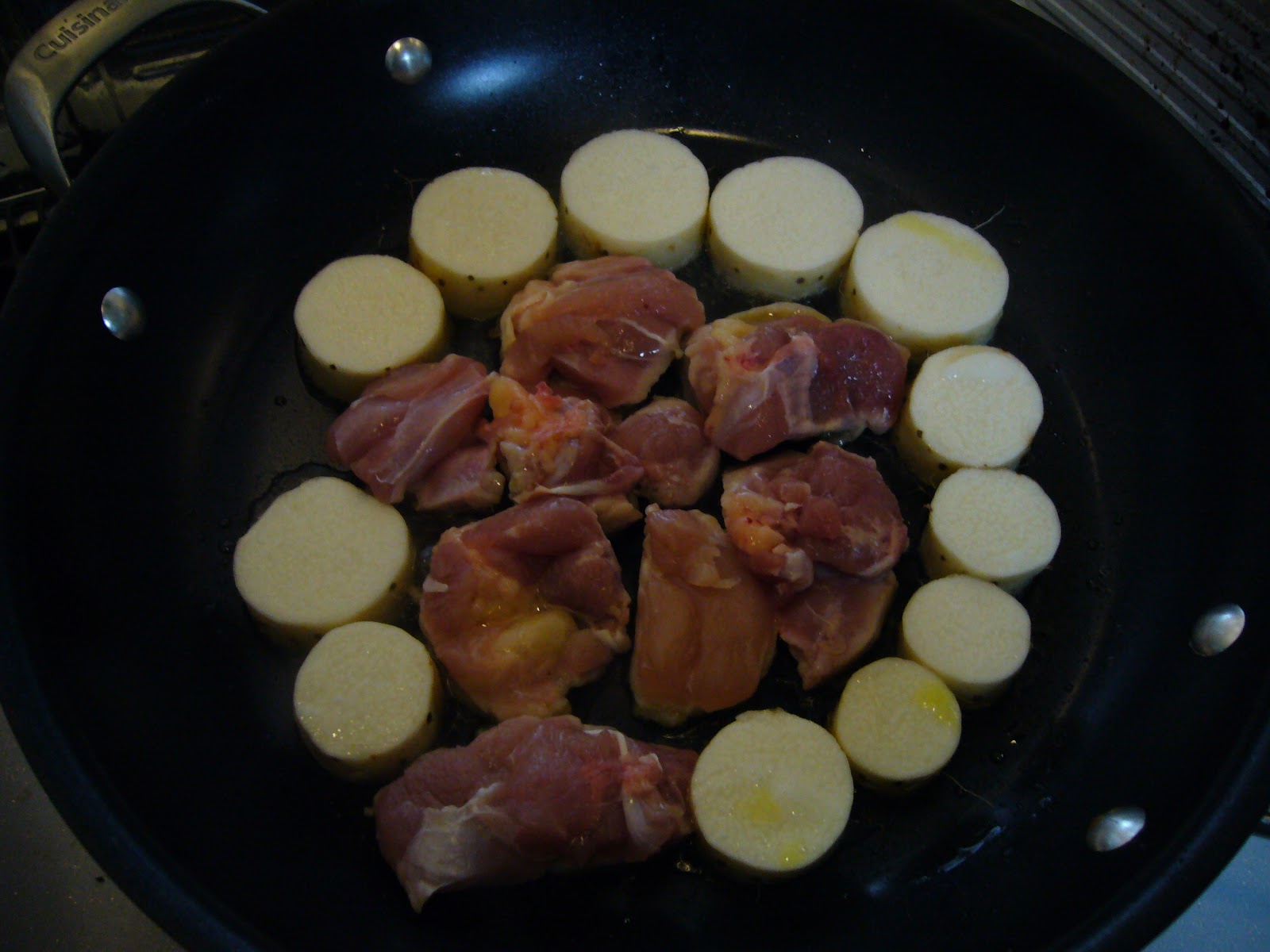
There are many ways to cook it, and you can eat it raw. Here I have cooked it with chicken, using the fat from the chicken to crisp up the potatoes like Japanese style fries :)


Chinese Yam Fries
1. Put boneless chicken pieces in a pan, skin side down.
2. Scrub a piece of yam, slice into 1.5cm slices.
3. When the chicken fat is starting to coat the pan, add the yam.
4. Cook yam until golden on both sides.
5. Turn the chicken.

Chicken and Tomato Stew
1. Cook chicken as above.
2. While it is cooking, chop vegetables you want to use. In this case, 2 small eggplants, one young green onion, piece of negi leek.
3. Add veggies to pan. Toss in the chicken oil.
4. Add a glass lid and cook for a few minutes.
5. Cover with a can of chopped tomatoes.
6. Simmer for 5 minutes.


Horseradish

Have you ever tried fresh horseradish? I found it about a month ago at my local vegetable shop. One of the reasons I like the shop is they have a lot of unusual things not normally grown in Japan.

I'd eaten horseradish from a jar, or as a powder that was made into a paste, same as mustard, but never fresh. You really should try it because the flavor is SO good!

I grated it and put it on the top of beef. Just beef and horseradish - no salt or sauce was necessary. I can understand why it is called Western wasabi in Japanese, because the heat is felt in your nose, rather than in your mouth like chili pepper. 

Dinner was just the beef, roasted tomatoes and "bunapi" mushrooms and negi leek sauteed in olive oil. I cooked the mushrooms/leek first, then the beef after that. The oil in the pan was enough so I didn't add more for the beef.


Tuesday, March 1, 2011

My local vegetable shop

I buy almost all my vegetables and fruit from this small vegetable shop near my house.

The shop is owned by a young farmer, and his friends who are also farmers sell their produce there, too.

They are not certified organic, but use no chemicals or as little as they can. But best of all, the veggies are REALLY fresh and taste great. They taste like vegetables should taste like :) Sometimes the produce is damaged by frost, etc, but it still tastes nice! I much prefer imperfect vegetables than beautiful ones from a supermarket that have no taste.

Another thing we learn from shopping here is which vegetables and fruits are truly in season. Of course, summer has many more choices, but it is important to eat the foods in season and not eat many imported foods. So even though I love red and yellow bell peppers, I have to wait until the summer to eat them :(

Some fruit such as the oranges you can see in the photo, do come from another prefecture, such as somewhere in Shikoku, but everything else is local. This is also the same shop where I buy the free-range eggs - direct from Mr. Hozomi's chickens every day.

This basket full of produce cost 2, 620 yen. This week was a little more expensive than usual because I bought strawberries and some citrus fruit.

Here is what I got:
12 eggs, 2 packs of spinach, stick of mountain potato, lettuce, tomatoes, rape-blossom greens, horse-radish, turnips, baby potatoes, shallots, Chinese cabbage, lemons, kumquats.